
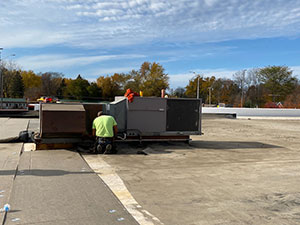
Storms and high winds can cause sudden and often hidden damage to commercial roofing systems, making commercial roof repair a critical part of protecting a building. Issues like membrane tears, displaced flashing, punctures, or loosened fasteners can allow water intrusion long before visible interior leaks appear. At Century Commercial Roofing, we evaluate emergency commercial roof repair needs for buildings throughout Fairlawn, Ohio, where wind events, heavy rain, and seasonal storms regularly stress low-slope roofing systems. Understanding how storm damage affects commercial roofs and how emergency repairs are handled helps property owners act quickly and avoid broader system failure. For urgent roof concerns following severe weather, our team can be reached at 330-926-6972.
Commercial Roof Repair After Storm or Wind Damage
Commercial roofs are designed to resist weather exposure, but severe storms introduce forces that go beyond normal operating conditions. High winds can lift membrane edges, stress seams, and pull at flashing components, while driving rain can exploit even small openings in the roof system.
Common storm-related damage includes:
- Membrane uplift or tearing along seams and perimeters
- Dislodged edge metal and coping systems
- Punctures caused by windborne debris
- Compromised flashing around rooftop equipment
- Blocked or overwhelmed drainage components

This type of damage is often spread across the roof surface, making professional inspection essential after major weather events.
When Commercial Roof Repair Becomes an Emergency
Not all storm damage requires immediate action, but certain conditions qualify as emergency commercial roof repair because they pose a direct risk to the building interior or structure. Active water intrusion, exposed insulation, or roof openings created by wind damage should be addressed as soon as possible.
Emergency situations typically involve:
- Visible leaks during or immediately after a storm
- Missing or displaced roofing materials
- Structural components exposed to weather
- Saturated insulation that threatens roof stability
Quick response helps stabilize the roof and prevent water from spreading into unaffected areas.
The Emergency Commercial Roof Repair Process Explained
Emergency commercial roof repair focuses on stabilization first, not permanent restoration. The goal is to stop water entry and secure vulnerable areas until full repairs can be planned.
A typical emergency repair process includes:
- Initial damage assessment and safety evaluation
- Temporary waterproofing or membrane securement
- Removal of loose or hazardous materials
- Documentation of damaged areas for follow-up repairs
These steps protect the building while allowing time for a more thorough repair strategy to be developed.
Temporary Repairs vs Permanent Commercial Roof Repair
Temporary emergency repairs are not intended to serve as long-term solutions. They are designed to hold until conditions allow for permanent commercial roof repair.
Key differences include:
- Temporary repairs prioritize speed and containment
- Permanent repairs address underlying system damage
- Follow-up work restores full roof performance
- Materials and attachment methods differ between stages
Understanding this distinction helps building owners plan next steps without assuming the emergency fix resolves the issue permanently.
Post-Storm Inspections Matter Even Without Leaks
Not all storm damage results in immediate leaks. Wind uplift and seam stress can weaken roofing components in ways that only become visible weeks or months later. Post-storm inspections identify these hidden issues before they escalate into major failures.
Regular inspections after severe weather allow for:
- Early detection of membrane stress
- Identification of loose flashing or fasteners
- Drainage system evaluation
- Documentation for maintenance planning
This proactive approach reduces long-term repair costs and unexpected disruptions.
Managing Emergency Commercial Roof Repair Planning
Emergency commercial roof repair is most effective when it is part of a broader roof management plan. Buildings with documented roof conditions, repair histories, and inspection schedules are easier to stabilize quickly after storm events. Planning ahead helps reduce response time and limits the extent of damage when severe weather occurs.
Commercial Roof Repair Specialists
In Fairlawn, Ohio, storms can disrupt business operations if roof damage is not addressed promptly. At Century Commercial Roofing, commercial roof repair focuses on protecting interiors, equipment, and occupants while preserving the integrity of the roofing system. Quick stabilization followed by informed repair decisions helps extend roof life and minimize operational downtime. For questions about commercial roof repair needs, Century Commercial Roofing can be reached at 330-926-6972.
FAQ
How quickly should emergency commercial roof repair be addressed after a storm?
Emergency conditions should be evaluated as soon as it is safe to access the roof, ideally within 24 to 48 hours, to limit water intrusion and secondary damage.
Can emergency commercial roof repair be performed during ongoing bad weather?
Temporary stabilization may be possible in some conditions, but safety and material limitations often require waiting until weather improves.
Does emergency commercial roof repair always involve interior leaks?
No. Many emergency repairs address exterior damage that has not yet caused interior leaks but poses a high risk of future failure.
Will emergency commercial roof repair affect long-term roof warranties?
Temporary repairs themselves usually do not, but improper or undocumented work can impact warranty coverage, which is why professional evaluation is important.