
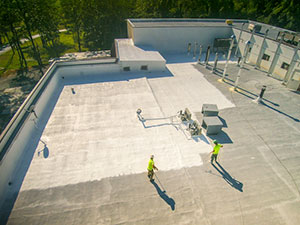
Spray Foam Roofing Montrose, OH

Spray Foam Roofing Montrose, OH 1

Spray foam roofing is a highly versatile solution for commercial buildings, combining insulation and waterproofing in a single, seamless application. In Montrose, OH, Century Commercial Roofing helps property owners evaluate whether spray foam roofing is the best choice for their building. Call 330-926-6972 today to schedule your consultation with our experts.

Understanding Spray Foam Roofing

By understanding how SPF systems work, the benefits they provide, and the types of roofs they are best suited for, commercial property owners can make informed decisions that protect their investment and improve building performance over time.

What is Spray Foam Roofing?

Spray foam roofing, also called spray polyurethane foam (SPF), is applied as a liquid that expands into a dense, closed-cell foam. Once cured, the foam forms a continuous, monolithic layer that adheres directly to the existing roof surface. Unlike traditional roofing systems, spray foam has no seams or joints, which are typically weak points where leaks can occur.

SPF roofing provides both insulation and waterproofing, creating a roof surface that is highly resistant to water penetration, temperature fluctuations, and minor mechanical stresses. It flows into gaps, uneven surfaces, and penetrations, forming a uniform protective layer that strengthens the overall roof system.

Why does Spray Foam Roofing Work Well?

Spray Foam Roofing Montrose, OH 2

Spray foam roofing is particularly effective for commercial buildings because it addresses multiple challenges simultaneously:

  • Seamless Protection: By eliminating seams, SPF reduces the number of potential leak points.
  • High Insulation Value: Spray foam’s R-value of 6.0–6.5 per inch helps stabilize interior temperatures, lowering energy costs.
  • Flexible and Durable: The foam can expand and contract with the building, minimizing cracking or splitting.
  • Lightweight Application: It adds minimal weight, making it suitable for retrofit projects.
  • Adaptable to Irregular Roofs: Spray foam easily covers drains, vents, and other roof penetrations.

These combined features make spray foam roofing a practical, long-term solution for flat and low-slope commercial roofs, ensuring both energy efficiency and leak protection.

Ideal Roof Conditions for SPF

Spray foam roofing performs best when the existing roof structure is stable and free of severe damage. SPF is not recommended for roofs with extensive rust, structural compromise, or significant material degradation. It is most effective in these scenarios:

  • “Flat” or low-slope commercial roofs with minor surface wear
  • Buildings experiencing minor leaks or ponding issues
  • Roofs that require enhanced thermal insulation
  • Retrofit projects where minimal roof tear-off is desired

By evaluating these conditions, property owners can determine if spray foam will deliver long-lasting performance and protect the building envelope.

Energy Efficiency Benefits

Spray foam roofing is an excellent solution for improving building energy efficiency. The high R-value reduces heat transfer, helping maintain stable interior temperatures during both summer and winter. In large commercial buildings, where HVAC systems account for a significant portion of energy costs, SPF roofing can contribute to measurable savings over time.

Additionally, many spray foam systems include reflective top coatings that reduce heat absorption, further lowering cooling costs while protecting the roof surface from UV damage. These features make SPF roofing a dual-purpose solution, combining leak protection with energy conservation.

Long-Term Durability and Structural Benefits

Spray foam roofing provides durability across a variety of weather conditions. Its flexible structure allows it to expand and contract with temperature changes, reducing the risk of cracking. When topped with a protective elastomeric coating, SPF roofs are resistant to UV degradation, wind damage, and minor mechanical impacts.

The lightweight nature of spray foam makes it ideal for retrofitting older commercial roofs without adding significant structural load. This adaptability, combined with its ability to conform to irregular surfaces, makes spray foam a highly practical solution for buildings with complex roof geometries.

Signs Spray Foam Roofing Is Right for Your Roof

Knowing when SPF is the right choice is crucial for building owners. Signs that spray foam roofing may be beneficial include:

  • Recurrent minor leaks or water infiltration
  • Aging roof coatings or minor surface deterioration
  • Roofs with poor insulation and high energy bills
  • Areas prone to water ponding or uneven surfaces

Early identification of these conditions allows property owners to address potential issues before they escalate into major damage.

Protect Your Roof with Spray Foam Roofing

For commercial buildings in Montrose, OH, spray foam roofing offers a seamless, energy-efficient, and durable solution. When installed over a structurally sound roof, SPF provides a continuous protective layer that strengthens the roof, reduces leaks, and improves interior climate control. Century Commercial Roofing guides property owners through roof assessments, installation planning, and applications to ensure the spray foam system meets the specific needs of each building. For expert advice on whether SPF roofing is right for your commercial property, call 330-926-6972 and speak with an expert today.

FAQ

What makes spray foam roofing unique?
It forms a seamless barrier, eliminating joints and weak points for superior leak resistance.

Can spray foam roofing reduce energy bills?
Yes, its high R-value insulation improves thermal efficiency and lowers heating and cooling costs.

Is SPF suitable for existing roofs?
Yes, it can often be applied over a structurally sound roof, minimizing tear-off.

How long does spray foam roofing last?
With proper application and coating, SPF roofs can last decades while maintaining performance.

Roof Maintenance Akron, OH

Roof Maintenance1

For commercial property owners, a roof is more than a protective layer. It is a critical capital asset that directly impacts operating costs, tenant satisfaction, and long-term property value. Yet roof maintenance is often treated as a discretionary expense rather than a strategic investment. In a market like Akron, OH, where seasonal weather swings, snow loads, freeze–thaw cycles, and summer heat all take a toll on roofing systems, proactive roof maintenance plays a key role in preserving capital and avoiding unnecessary financial risk.

Getting the most from your commercial roofing investment is fundamental to good roofing management. Partner with Century Commercial Roofing for great long-term results. Call 330-926-6972 today and schedule your consultation.

Roof Maintenance as a Capital Preservation Strategy

Commercial roof maintenance is best understood not as a repair activity, but as an asset management strategy. When owners shift their mindset from “fixing leaks” to “preserving roof performance,” the financial benefits become clear.

Roof Maintenance Protects the Full Lifecycle of the Asset

Every commercial roof is designed with an expected service life. Without maintenance, that lifespan shortens dramatically. Minor issues such as clogged drains, deteriorated sealants, or loose flashing may seem insignificant, but left unaddressed, they accelerate system failure. Water intrusion, insulation saturation, and membrane degradation all compound over time, driving owners toward premature replacement.

Routine roof maintenance helps keep the roof operating as designed. Regular inspections identify small problems early, when repairs are simpler and far less expensive. Over the life of a commercial roof, consistent maintenance can add years of service, delaying major capital expenditures and improving return on investment.

Maintenance Reduces Unplanned Capital Expenses

One of the biggest threats to a building owner’s budget is the unexpected roof failure. Emergency repairs are always more expensive than scheduled maintenance, and they often come with added costs such as interior damage, tenant disruption, or lost revenue.

Preventative roof maintenance shifts spending from reactive to planned. Instead of facing sudden five- or six-figure replacement decisions, owners gain predictability. Inspection reports and maintenance documentation allow for smarter budgeting, phased repairs, and long-term planning. This level of financial control is especially valuable for owners managing multiple commercial properties or facilities.

Protecting Property Value and Marketability

A well-maintained roof supports the overall value of a commercial building. Buyers, lenders, and insurers increasingly look at roof condition and maintenance history during due diligence. A documented maintenance program demonstrates responsible ownership and reduces perceived risk.

For leased properties, roof performance directly affects tenant retention. Leaks, water stains, and recurring roof issues undermine confidence and create friction with occupants. Consistent maintenance helps avoid these issues, protecting both tenant relationships and lease stability.

Roof Maintenance2

Maintenance Supports Warranties and Insurance Coverage

Many commercial roofing warranties require documented maintenance as a condition of coverage. Skipping routine inspections or neglecting recommended repairs can jeopardize warranty protection, leaving owners fully exposed when problems arise.

Insurance carriers also consider roof condition when evaluating claims. In some cases, lack of maintenance documentation can complicate or even limit coverage. A structured maintenance program provides the records needed to support warranty compliance and insurance requirements, reducing risk across the board.

Akron’s Climate Makes Maintenance Non-Negotiable

In Northeast Ohio, commercial roofs face a unique combination of environmental stressors. Snow accumulation, ice dams, and freeze–thaw cycles can open seams and stress flashing during winter months. Spring and summer storms test drainage systems, while heat and UV exposure contribute to material aging.

Seasonal roof maintenance is essential in Akron. Clearing drains, checking penetrations, and addressing weather-related wear before it escalates helps protect the building envelope year-round. Owners who skip maintenance often discover issues only after interior damage has already occurred.

Working with the Right Commercial Roofing Partner

An effective maintenance strategy requires more than a quick visual check. It involves systematic inspections, minor corrective work, and clear reporting that gives owners actionable insight into roof condition and future needs.

Century Commercial Roofing understands how to align roof maintenance with long-term ownership goals. By focusing on asset preservation rather than short-term fixes, building owners gain a clearer picture of roof performance and capital planning.

Comprehensive Roof Maintenance Services

For Akron commercial property owners, roof maintenance should be viewed through the lens of capital preservation. It protects the roof’s lifespan, stabilizes operating costs, supports property value, and reduces risk. In the long run, consistent maintenance costs far less than neglect, making it one of the most financially sound decisions an owner can make for their building.

To learn more about the impact of quality commercial roof maintenance services on your bottom line, call 330-926-6972 and speak with a Century Commercial Roofing expert today.

FAQ

Does roof maintenance really reduce replacement costs?
Yes. Routine maintenance helps extend the service life of a roof, delaying replacement and reducing the likelihood of costly emergency repairs.

Is roof maintenance necessary if the roof is not leaking?
Absolutely. Many roof issues develop long before leaks appear. Maintenance focuses on prevention, not just visible problems.

Single-Ply Roofing Montrose, OH

Single-Ply Roofing Montrose, OH 1

At Century Commercial Roofing, we help business owners in Montrose, Ohio, make informed decisions with professional single-ply roofing solutions. Single-ply roofing consists of flexible, waterproof membranes installed in a single layer, offering durability, energy efficiency, and low maintenance. Understanding how different membranes perform across key metrics is essential for choosing the right roof for your building. For professional guidance or installation, contact Century Commercial Roofing at 330-926-6972, serving commercial properties throughout Montrose, Ohio.

Comparing Single-Ply Roofing Systems

Single-ply roofing comes in several membrane types, each with unique materials and properties. There have been innovations in this space over time and here are the latest types you should be aware of:

  • PVC (Polyvinyl Chloride) is a thermoplastic membrane made from vinyl polymer, known for chemical resistance and durability.
  • TPO (Thermoplastic Polyolefin) is a single-ply membrane made from a blend of polypropylene and ethylene-propylene rubber, valued for its reflective properties and energy efficiency.
  • EPDM (Ethylene Propylene Diene Monomer) is a synthetic rubber membrane that is highly flexible and performs well under extreme temperature variations.

Understanding these base materials helps in evaluating performance, lifespan, and suitability for different commercial roofs.

PVC vs TPO

Single-Ply Roofing Montrose, OH 2

When comparing PVC (Polyvinyl Chloride) and TPO (Thermoplastic Polyolefin) membranes, the differences become clear across key performance metrics:

  • Durability: PVC is highly resistant to UV exposure, chemicals, and oils, making it suitable for industrial environments. TPO is also UV-resistant and performs well under general weather conditions but has slightly less chemical resistance than PVC.
  • Flexibility: PVC remains flexible under temperature changes and adapts well to roof movement. TPO is moderately flexible, performing well under typical thermal expansion and contraction.
  • Energy Efficiency: TPO is highly reflective, reducing cooling costs in summer. PVC can also be reflective but may have slightly lower energy efficiency depending on the formulation.
  • Seam/Attachment Reliability: Both use heat-welded seams for watertightness. PVC seams are generally more proven in chemically challenging environments, while TPO seams perform reliably under standard commercial conditions.
  • Maintenance / Lifespan: PVC typically lasts 20–30 years and resists chemical damage. TPO has a slightly shorter lifespan if exposed to chemical contaminants but is still durable with proper maintenance.

TPO vs EPDM

Let’s do the same with TPO and EPDM:

  • Durability: TPO offers UV and ozone resistance, while EPDM excels in resisting extreme temperature fluctuations. EPDM may not resist chemical exposure as well as TPO.
  • Flexibility: EPDM is extremely flexible, ideal for unusual roof shapes or significant thermal expansion. TPO is less flexible but handles standard expansion and contraction adequately.
  • Energy Efficiency: TPO’s reflective surface reduces heat absorption, lowering cooling costs. EPDM, typically black, absorbs heat unless a reflective coating is applied.
  • Seam/Attachment Reliability: TPO uses heat-welded seams, providing strong and permanent bonding. EPDM seams are usually glued or taped, which can be more susceptible to weathering over time.
  • Maintenance / Lifespan: Both membranes can last 20–30 years. TPO may require seam inspections to prevent leaks, whereas EPDM allows for easier patching when necessary.

EPDM vs PVC

EPDM and PVC membranes differ in their strengths but can be directly compared using the same metrics:

  • Durability: EPDM is highly resistant to temperature extremes and UV exposure. PVC offers strong chemical resistance and excellent UV protection.
  • Flexibility: EPDM is extremely flexible under thermal expansion and contraction. PVC also adapts well to movement but may be slightly less flexible than EPDM in cold temperatures.
  • Energy Efficiency: PVC’s reflective properties reduce cooling costs effectively. EPDM absorbs heat unless a reflective coating is applied.
  • Seam/Attachment Reliability: PVC uses heat-welded seams, creating strong, permanent bonds. EPDM uses glued or taped seams, which require careful maintenance.
  • Maintenance / Lifespan: Both membranes are long-lasting. PVC may handle chemical exposure better, while EPDM allows simpler repairs if minor damage occurs.

Single-Ply Roofing Installation

Proper installation is critical for maximizing single-ply roofing performance:

  • Surface Preparation: Roof decks must be clean, dry, and structurally sound before installation.
  • Attachment Methods: Membranes can be mechanically fastened, fully adhered, or ballasted depending on building design.
  • Seam Integrity: Heat-welded or glued seams must be inspected to ensure waterproofing.
  • Ongoing Inspections: Conduct inspections at least twice a year and after major weather events to detect early wear or seam issues.

Routine inspection and maintenance are essential to ensure all membrane types perform according to their designed lifespan.

Single-Ply Roofing Specialists

Selecting the right single-ply roofing system requires understanding how PVC, TPO, and EPDM perform under key metrics. Century Commercial Roofing helps Montrose, OH business owners evaluate options, ensuring durable, energy-efficient, and low-maintenance roofs. For professional installation or evaluation, contact Century Commercial Roofing at 330-926-6972, serving commercial properties throughout Montrose, Ohio.

FAQ

What is single-ply roofing?
A roofing system with a single layer of flexible membrane for waterproofing and durability.

Which single-ply membrane is best for chemical exposure?
PVC is highly resistant to oils, greases, and industrial chemicals.

Which membrane offers the best flexibility?
EPDM is the most flexible, ideal for unusual roof shapes and thermal expansion.

How long does single-ply roofing last?
With proper installation and maintenance, membranes typically last 20–30 years.

Roof Damage Akron, OH

Roof Damage1

When commercial property owners think about roof damage, they often picture visible leaks or interior ceiling stains. In reality, some of the most expensive and disruptive roof damage happens out of sight. For commercial buildings in Akron, OH, hidden roof damage is especially common due to seasonal weather shifts, freeze-thaw cycles, and prolonged moisture exposure.

Partner with Century Commercial Roofing to ensure your investment is well protected from both visible and hidden roof damage. Call 330-926-6972 today to schedule your consultation.

Risks of Hidden Roof Damage

Understanding how unseen roof damage develops and why it matters can help building owners protect their assets, control operating costs, and avoid unexpected interruptions.

What Is Hidden Roof Damage?

Hidden roof damage refers to deterioration that occurs below the surface of a commercial roofing system. This can include trapped moisture within insulation, membrane separation, failing seams, compromised flashing, or structural stress caused by repeated water exposure. Unlike obvious leaks, these issues may progress for months or even years before becoming visible inside the building.

By the time interior signs appear, the damage has often spread beyond the roof covering itself, increasing both repair scope and cost.

How Climate Increases the Risk

Commercial roofs in Akron are exposed to frequent rain, snow, ice, and temperature fluctuations. Freeze-thaw cycles can force water into small openings in the roof system, where it expands as it freezes. Over time, this process can loosen fasteners, weaken seams, and allow moisture to penetrate insulation layers.

Even well-constructed roofs are vulnerable when standing water, clogged drains, or aging materials are present. Without routine inspections, hidden roof damage can continue unchecked between seasonal weather events.

Common Types of Hidden Roof Damage

One of the most common forms of hidden damage is moisture trapped beneath the roof membrane. Wet insulation loses its thermal value, driving up heating and cooling costs while placing additional stress on HVAC systems. Over time, this moisture can also lead to deck deterioration and structural concerns.

Another frequent issue involves flashing and transition points around rooftop equipment, walls, and drains. These areas may appear intact from a distance but fail at the seams, allowing water intrusion during heavy rain or snowmelt.

In some cases, roof membranes begin to separate or blister due to vapor pressure from below. These problems may not cause immediate leaks but weaken the roof system’s overall performance and lifespan.

The Impact on Building Operations

Hidden roof damage rarely stays contained to the roof. Moisture intrusion can affect ceilings, walls, electrical systems, inventory, and sensitive equipment. For occupied commercial buildings, this can lead to tenant complaints, safety concerns, and operational downtime.

Energy efficiency is another often overlooked consequence. A damaged roof system allows heat loss in winter and heat gain in summer, increasing monthly utility expenses. Over time, these higher operating costs can exceed the price of addressing the roof damage early.

Roof Damage2

Why Visual Checks Are Not Enough

Many property owners rely on visual checks from the ground or interior walkthroughs to assess roof condition. While useful, these methods cannot detect subsurface moisture or early-stage membrane failures.

Professional roof inspections use specialized tools and trained evaluations to identify hidden damage before it becomes disruptive. These inspections provide documentation that helps owners make informed decisions about repairs, restoration, or long-term planning.

Preventing Hidden Roof Damage Through Proactive Care

Routine inspections are the most effective way to uncover hidden roof damage early. For commercial properties in Akron, inspections are especially important after severe weather and before winter sets in.

Working with an experienced commercial roofing provider like Century Commercial Roofing allows owners to stay ahead of potential issues. By addressing minor damage early, owners maintain more repair options and avoid being forced into emergency decisions.

Roof Damage Specialists

Hidden roof damage may not be visible, but its consequences are very real. Proactive roof management protects building value, supports uninterrupted operations, and keeps long-term costs under control.

To learn more about the dangers of hidden roof damage, call Century Commercial Roofing at 330-926-6972 and speak with an expert today.

FAQ

Can hidden roof damage affect insurance coverage?
Yes. Undocumented or long-term damage may complicate insurance claims, especially if routine maintenance or inspections were not performed.

Is hidden roof damage always a sign that replacement is needed?
Not necessarily. Early detection often allows for targeted repairs or restoration that extend roof life and delay full replacement.

Roof Coating Montrose, OH

Roof Coating Montrose, OH 1

Commercial roofs face unique challenges: constant sun, water exposure, and heavy rooftop equipment all put coatings to the test. At Century Commercial Roofing, we guide facility managers in Montrose, Ohio on how to select and maintain coatings that protect their roofs and extend service life. Proper evaluation of roof conditions, exposure, and operational needs help determine whether a roof coating is the right investment for you. After installation, our roofers give you a neat rundown on energy efficiency, water protection, and long-term durability. Call us on 330-926-6972 for a technical assessment and professional recommendations tailored to commercial properties.

Roof Coating Matters for Commercial Buildings

Coatings are more than a cosmetic upgrade. They serve as a protective barrier, extend roof life, and can improve energy efficiency for warehouses, office buildings, and industrial facilities. Commercial roofs often have large flat or low-slope areas, which increases exposure to standing water, UV rays, and wear from maintenance traffic. Choosing the right coating ensures that these risks are mitigated while minimizing reactive repair costs.

Matching Roof Coating to Conditions

Roof Coating Montrose, OH 2

Selecting the right coating requires understanding how each type performs under the stresses of commercial roofing. Below is a detailed breakdown of common coating families:

  • Acrylic Coatings: Acrylic coatings are water-based and highly reflective, reducing rooftop heat gain and lowering energy costs. They work best on well-drained commercial roofs with minimal ponding. Acrylics are flexible, allowing them to expand and contract with the roof during temperature fluctuations, which helps prevent cracking. They are ideal for warehouses and office buildings where UV exposure is significant, but foot traffic and mechanical wear are moderate. However, they require proper drainage; standing water can shorten their lifespan.
  • Silicone Coatings: Silicone coatings excel at waterproofing and resisting ponding water, making them well-suited for low-slope commercial roofs where water can accumulate. They are highly UV-resistant, so they maintain performance under prolonged sun exposure. Silicones are particularly beneficial for facilities with irregular drainage or areas prone to heavy rainfall. Maintenance involves keeping the surface clean to prevent dirt buildup, which can reduce reflectivity over time.
  • Polyurethane Coatings: Polyurethane coatings offer exceptional durability and impact resistance. These coatings are ideal for commercial roofs with high foot traffic, rooftop HVAC units, or frequent maintenance activity. Their toughness helps prevent punctures and surface abrasion, while still reflecting sunlight to maintain some energy efficiency. Polyurethane coatings are preferred for industrial warehouses and distribution centers where the roof may experience mechanical wear or debris impact.

Decision Checklist

We have compiled a list of statements for commercial property owners across Ohio. A simple, true, or false answer to these will help our roofers determine what coating will suit your system best:

  • Roof drains completely within 48 hours after rain
  • Heavy rooftop equipment or maintenance traffic
  • Energy efficiency or reflective performance a priority
  • Surface wear, cracks, or degraded membranes present
  • Coating recoat intervals and maintenance resources available

Answering these questions ensures coatings are selected for performance and longevity, not just cost.

Application Realities and Key Controls

The success of any coating depends on preparation and quality control:

  • Roof must be cleaned and dry before application
  • Repairs to seams, penetrations, and weak spots should be completed
  • Environmental conditions during application affect curing
  • Thickness verification and continuity checks prevent early failure
  • Multi-stage systems require base coats, reinforcement, and topcoats applied in sequence

Quality control prevents early delamination, blistering, or adhesion issues.

Lifecycle and Maintenance Considerations

Roof coatings are systems, not single-step fixes. Periodic inspections, cleaning, and timely recoating maximize lifespan and protect ROI. Properly maintained coatings can extend roof life by 8–20 years depending on material, exposure, and usage. Coatings also reduce energy costs by reflecting heat, especially on flat commercial roofs in high sun regions.

Roof Coating Specialists

Choosing the right roof coating in Montrose, Ohio, involves evaluating roof condition, exposure, and facility operations. Century Commercial Roofing provides commercial-grade guidance, inspections, and application planning to ensure coatings deliver long-term protection and energy savings. Facility managers can extend roof life, reduce maintenance costs, and protect building investments with the proper coating strategy. Call 330-926-6972 for a comprehensive evaluation and coating plan for your commercial roof.

FAQ

How long do commercial roof coatings last
Typically 8–20 years depending on material, roof exposure, and maintenance.

Can coatings be applied over existing commercial membranes
Yes, with proper cleaning, substrate preparation, and adhesion testing.

Will coatings prevent ponding water damage
Silicone coatings resist ponding; however, correcting drainage is still essential.

How often should coated roofs be inspected
Inspect at least twice per year and after storms, focusing on drains, penetrations, and high-traffic zones.

Commercial Roof Inspection Akron, OH

Commercial Roof Inspection Akron, OH 1

Flat roof systems are common on commercial buildings throughout Akron, OH, including warehouses, manufacturing facilities, retail centers, and office buildings. While flat roofs are durable and cost-effective, they require regular professional evaluation to perform as intended. A scheduled commercial roof inspection is one of the most effective ways to protect your building, control long-term costs, and extend the life of flat roof systems such as TPO, EPDM, and PVC.

At Century Commercial Roofing, we perform detailed commercial roof inspections designed specifically for flat roofing systems and the weather conditions common in Northeast Ohio. Call 330-926-6972 today to schedule your consultation.

Commercial Roof Inspection for Flat Roof Systems

Why Flat Roofs Require Specialized Commercial Roof Inspection

Unlike steep-slope roofing, flat roofs rely on membranes, seams, and drainage systems to keep water out of the building. Even small defects can allow moisture intrusion that goes unnoticed until interior damage occurs. A professional commercial roof inspection focuses on identifying early warning signs before they turn into costly structural issues.

Akron’s freeze-thaw cycles, heavy rainfall, wind, and snow loads place additional stress on flat roofing materials. Regular inspections help ensure these systems continue to perform under changing seasonal conditions.

What Is Evaluated During a Flat Roof Commercial Roof Inspection

A thorough commercial roof inspection for flat roof systems includes several critical evaluation areas:

Membrane Condition

Inspectors examine the roofing membrane for punctures, cuts, surface wear, shrinkage, and UV degradation. On systems like TPO and PVC, membrane flexibility and surface integrity are essential to prevent leaks.

Seams and Welds

Seam failure is one of the most common causes of flat roof leaks. During a commercial roof inspection, seams are checked for separation, improper welds, or signs of aging that may compromise water resistance.

Flashing and Penetrations

Roof penetrations such as HVAC units, vents, skylights, and parapet walls are closely inspected. Flashing failures often occur due to movement, weather exposure, or improper installation, making this a critical focus area.

Commercial Roof Inspection Akron, OH 2

Drainage and Ponding Water

Flat roofs must drain efficiently. Inspectors assess internal drains, scuppers, and gutters for clogs or design issues. Ponding water can accelerate membrane breakdown and lead to premature failure if not addressed.

Previous Repairs

Improper or aging repairs are common findings during a commercial roof inspection. These areas are evaluated to ensure compatibility with the existing roof system and long-term effectiveness.

Common Issues Found During Flat Roof Inspections

Professional commercial roof inspections frequently uncover problems that building owners may not notice from inside the facility, including open or deteriorating seams, cracked or loose flashing, punctures from foot traffic or equipment, drainage blockages causing standing water, and early membrane shrinkage or brittleness.

Identifying these issues early allows targeted repairs that cost significantly less than emergency leak response or full roof replacement.

How Regular Inspections Extend the Life of Flat Roof Systems

A consistent commercial roof inspection program helps flat roofs reach or exceed their expected service life. By correcting small issues promptly, building owners reduce the risk of moisture intrusion that can damage insulation, decking, and interior spaces.

Inspection documentation also supports roof warranties, insurance claims, and long-term maintenance planning. Many manufacturers require proof of regular inspections to keep warranties valid.

When to Schedule a Commercial Roof Inspection

Century Commercial Roofing recommends scheduling a commercial roof inspection twice per year for flat roof systems. Spring and fall inspections are ideal, as they allow contractors to assess winter-related damage and prepare the roof for upcoming seasonal conditions. Additional inspections should be performed after severe weather events such as heavy snow, windstorms, or hail.

Comprehensive Commercial Roof Inspection Services

Century Commercial Roofing provides professional commercial roof inspection services for flat roof systems throughout Akron, OH and surrounding areas. Our inspections are system-specific, detailed, and focused on helping building owners make informed decisions about maintenance, repair, or restoration.

If you manage or own a commercial building with a flat roof, scheduling a professional commercial roof inspection is a proactive step toward protecting your investment. Contact Century Commercial Roofing today at 330-926-6972 to schedule your commercial roof inspection in Akron, OH and gain clarity on the condition of your flat roof system.

FAQ

How long does a commercial roof inspection take?
Most commercial roof inspections can be completed in one to three hours, depending on the size of the building, roof complexity, and system type.

Can a commercial roof inspection find hidden moisture issues?
Yes. Visual inspections can identify surface concerns, while advanced methods such as infrared scanning can detect trapped moisture beneath the membrane when needed.

Do inspections require shutting down building operations?
In most cases, no. Commercial roof inspections are non-invasive and can be completed without disrupting daily operations.

Roof Damage Montrose, OH

Roof Damage Montrose, Ohio 1

At Century Commercial Roofing, we understand how critical it is to address roof damage in Montrose, Ohio before it escalates. A damaged roof can compromise your commercial property, affecting employees, equipment, and even your daily operations. Many roof issues begin small, and business owners often overlook them until they become costly emergencies. Our team specializes in detecting, repairing, and preventing roof damage, helping you protect your investment. Call us today on 330-926-6972 to schedule a professional inspection or repair.

Roof Damage Prevention

Early detection is the key to preventing severe roof damage. Some issues may not be obvious at first, but signs can include water stains on the ceiling, missing or loose shingles, cracks in roof membranes, or areas where the roof looks sagged or uneven. Regular inspections by professionals like Century Commercial Roofing can uncover these problems before they compromise the roof’s integrity.

Ignoring minor issues can result in leaks, structural damage, and expensive repairs. By taking action quickly, you can avoid significant costs, preserve your roof’s lifespan, and maintain a safe and reliable commercial building.

Common Causes of Roof Damage

Roof Damage Montrose, Ohio 2

Understanding what causes roof damage helps property owners prevent issues before they arise. Here are some of the most frequent contributors:

Severe Weather: Wind, hail, heavy rain, and snow can all take a toll on commercial roofs. Even a single storm can loosen fasteners, tear membranes, or cause ponding water that leads to long-term damage.

Aging and Wear: Commercial roofs naturally degrade over time. Materials lose flexibility, weaken seams, and protective coatings wear off, making older roofs more prone to leaks and other damage.

Poor Installation or Materials: Roofs that were installed incorrectly or with subpar materials often fail prematurely. Issues such as poorly sealed seams, weak flashing, or inadequate insulation can accelerate damage and reduce energy efficiency.

Lack of Maintenance: Even the best roofs need regular attention. Debris accumulation, clogged drains, and unchecked minor leaks can quickly escalate into serious problems if maintenance is neglected.

Foot Traffic and Equipment: Rooftop units, HVAC systems, and frequent foot traffic can cause punctures, cracks, or membrane damage. Professional inspections help identify and mitigate this type of wear before it spreads.

Recognizing Roof Damage Early

Knowing what to look for can save time and money. Some common warning signs include:

  • Water stains on ceilings or walls
  • Sagging or uneven areas on the roof
  • Cracks or blisters in membranes
  • Loose, missing, or damaged shingles or tiles
  • Rust, corrosion, or deterioration on metal roofs
  • Unusual sounds during storms or heavy winds

Regular inspections by a professional team like Century Commercial Roofing are crucial. They can spot subtle issues that may be invisible to the untrained eye and recommend the right solutions to prevent further damage.

Benefits of Early Intervention

Addressing roof damage promptly has several advantages:

  • Reduced Repair Costs: Small repairs are far less expensive than major replacements.
  • Extended Roof Lifespan: Proper maintenance and timely repairs keep your roof functional for longer.
  • Warranty Compliance: Many commercial roofing warranties require documented inspections and repairs.
  • Avoided Operational Disruption: Fixing minor issues prevents emergency situations that could interfere with business.

By acting early, you protect your property, employees, and budget.

Roof Damage Specialists

At Century Commercial Roofing, we are committed to helping businesses in Montrose, Ohio maintain strong, reliable roofs. Our professional inspections and repairs catch small issues before they become major problems. We provide clear recommendations, expert repair services, and guidance on ongoing maintenance. Call 330-926-6972 today to schedule a roof inspection or roof damage repair and ensure your commercial property stays protected.

FAQ

Can minor roof damage cause major problems?
Yes. Small leaks or cracks can quickly escalate into structural damage or costly repairs.

Will a professional inspection disrupt my business?
No. Our team works efficiently to minimize disruption to your operations.

How can I prevent roof damage?
Regular inspections, proper maintenance, and timely repairs are the best ways to prevent damage.

Commercial Roof Restoration Akron, OH

Commercial Roof Restoration1

Commercial roofs are built to last, but many building owners in Akron, OH replace their roofs far sooner than necessary. In many cases, a full tear off is not the only solution. Commercial roof restoration provides a practical way to extend the life of an aging system while avoiding the cost and disruption of replacement. With the right inspection and restoration plan, Century Commercial Roofing helps building owners regain confidence in their roofs without overspending. Call 330-926-6972 to speak with an expert today.

How Commercial Roof Restoration Helps Avoid Premature Replacement

Restoration is the process of repairing, reinforcing, and resurfacing an existing commercial roofing system so it performs like new again. Instead of removing the entire roof, crews address problem areas, reinforce weak points, and seal the surface with a high performance restoration coating. The result is a watertight, durable, energy saving system installed at a fraction of the cost of replacement.

Signs Your Roof May Still Be Restorable

Many roofs that look worn or weathered still have a solid foundation underneath. Property owners often assume a roof is too old, but age alone does not determine whether restoration will work. Key signs a roof is still a candidate include:

  • Localized leaks rather than widespread saturation
  • Surface cracking without deep structural damage
  • Good adhesion of the membrane or panels
  • Minimal moisture detected during testing
  • Sound insulation and deck conditions

If these factors line up, a professional restoration can add many years of reliable performance.

Moisture Content and Why It Matters

A roof with excessive trapped moisture is rarely a viable candidate for restoration. This is why core sampling and infrared scanning are essential. These tests determine how deep water has traveled and whether the insulation or decking has been compromised. If moisture is limited and materials remain stable, restoration becomes a strong and cost effective solution for your Akron, OH facility.

Substrate Compatibility and System Selection

Not all roofs are restored the same way. Metal, EPDM, TPO, PVC and modified bitumen each require specific preparation and compatible coating systems. Century Commercial Roofing evaluates each surface, identifies repair needs and chooses a restoration approach that bonds correctly with the existing materials. Proper system matching ensures long term performance and prevents adhesion issues.

Cost Savings Without Business Disruption

One of the biggest advantages of commercial roof restoration is avoiding the noise, debris and downtime associated with a full replacement. Because crews work over the existing system, business operations continue normally. Restoration also costs significantly less than replacement, giving property owners a budget friendly path to extend their roof’s lifespan.

Commercial Roof Restoration2

When Replacement Still Makes Sense

Although restoration is effective in many situations, some roofs are simply too deteriorated to recover. Widespread saturation, structural compromises, severe membrane failure, or improper installation can require a full replacement. Century Commercial Roofing will always provide honest recommendations so building owners make informed decisions based on safety, longevity, and return on investment.

Why Choose Restoration First

Local weather patterns, fluctuating temperatures and seasonal storms make commercial roofs in Akron, OH work hard year round. Restoration strengthens the roof’s defenses, improves reflectivity, and reduces long term maintenance demands. For many facilities, it becomes a smart preventive measure that delays costly replacement for many years.

Commercial Roof Restoration Experts

If you are unsure whether your commercial roof needs replacement or can be restored, a professional evaluation is the best starting point. Century Commercial Roofing provides detailed inspections, moisture testing and expert recommendations to help you choose the most cost effective solution for your building. Roof restoration may be the key to avoiding unnecessary expenses while preserving the performance of your existing system.

To learn more about commercial roof restoration and the benefits it offers your building, call 330-926-6972 and schedule your consultation.

FAQ

What is the typical lifespan extension from commercial roof restoration?
Most commercial roof restorations add ten to fifteen years of service, depending on the system used and the condition of the roof before restoration.

Does restoration work on older roofs?
Age is not the deciding factor. Many older roofs are still strong enough to be restored if moisture levels are low and the membrane or panels remain structurally sound.

How long does the restoration process take?
Most projects are completed in a matter of days, not weeks, making it far less disruptive than a full tear off and replacement.

Roof Maintenance Montrose, OH

Roof Maintenance Montrose, Ohio 1

At Century Commercial Roofing, we provide professional roof maintenance services in Montrose, Ohio, to help commercial property owners protect their investment and extend the life of their roofs. Regular roof maintenance is essential for preventing leaks, minimizing costly repairs, and ensuring your building remains safe and energy efficient. Our experienced team inspects, cleans, and repairs all types of commercial roofing systems, including flat, metal, and membrane roofs. Call us today on 330-926-6972 to schedule a consultation with our trusted contractors and keep your roof performing at its best.

Commercial Roof Maintenance

Commercial roofs face unique challenges compared to residential roofs. Exposure to weather, rooftop equipment, and foot traffic can cause wear and tear over time. Without proper maintenance, minor issues like small leaks, clogged drains, or damaged seams can escalate into significant problems. These issues not only compromise the roof’s performance but can also affect your building’s structural integrity and energy efficiency. Preventive roof maintenance ensures that your commercial property remains protected and operational throughout the year.

Regular maintenance also helps identify early signs of roof deterioration. By addressing these problems promptly, building owners can avoid unexpected downtime, costly emergency repairs, and potential insurance claims. For commercial facilities, the long-term benefits of professional maintenance are clear: enhanced roof lifespan, improved safety, and better energy efficiency.

Inspection and Cleaning Process

Roof Maintenance Montrose, Ohio 2

Our roof maintenance process begins with a comprehensive inspection. Century Commercial Roofing contractors examine all critical components of the roof, including membranes, seams, flashings, and drainage systems. We also inspect roof-mounted equipment for proper sealing and stability. Identifying areas of concern early allows us to implement targeted repairs that prevent minor issues from becoming major problems.

After the inspection, we perform thorough cleaning to remove debris, dirt, and any materials that could cause damage or block water flow. Proper cleaning not only reduces wear on the roof but also helps prevent leaks and standing water, which can accelerate deterioration. Our team pays special attention to drains and gutters to ensure water flows efficiently off the roof.

Minor Repairs and Preventive Measures

Once the roof is inspected and cleaned, our contractors address minor repairs to strengthen the roofing system. This may include resealing seams, tightening or replacing fasteners, patching small leaks, and applying protective coatings where necessary. Preventive measures such as these help maintain the roof’s integrity, enhance energy efficiency, and extend its overall lifespan.

We tailor maintenance plans to the specific needs of each commercial property. Different roofing materials require unique care, and our team has experience with flat, metal, and membrane systems. By customizing our approach, we ensure every roof receives the attention it needs to perform reliably for years to come.

Is DIY Roof Maintenance Worth It?

While building managers can perform basic checks, professional roof maintenance is essential for detecting subtle damage that may not be visible to the untrained eye. In such cases, a precursory check can result in negligence. This can prove to be costly in the long run. It is always recommended to have a professional on site before conducting such checks.

Century Commercial Roofing contractors use specialized tools and techniques to identify leaks, membrane damage, and other issues early. Thus, professional maintenance is always the way to go!

The Century Commercial Roofing Advantage

Our clients in Montrose, Ohio trust Century Commercial Roofing for their roof maintenance needs because we combine experience, expertise, and a proactive approach. We provide detailed reports after every inspection, outlining current roof conditions and recommended actions. By working with our team, commercial property owners gain peace of mind knowing their roofs are professionally maintained, energy-efficient, and protected from damage over time.

Thorough Roof Maintenance

At Century Commercial Roofing, our roof maintenance services in Montrose, Ohio help commercial properties stay leak-free, energy-efficient, and durable. Call us on 330-926-6972 to schedule an inspection and let our experienced contractors maintain your roof for long-term protection.

FAQ

How often should commercial roofs be maintained?
At least twice a year, ideally in spring and fall, or after severe weather events.

Can maintenance prevent costly roof repairs?
Yes, early detection and repair of minor issues prevent major damage.

Do you maintain all types of commercial roofs?
Absolutely, we work with flat, metal, and membrane roofing systems.

Is professional maintenance better than DIY inspections?
Yes, professional contractors identify hidden damage and apply long-lasting solutions.

Spray Foam Roofing Bath, OH

Spray Foam Roofing1

Spray foam roofing is known for its insulation value, seamless waterproofing, and ability to restore aging flat roof systems with minimal disruption. However, not every roof qualifies automatically. Building owners in Bath, OH often need clear guidelines on how to determine whether spray foam is appropriate for their structure. Century Commercial Roofing uses specific evaluation criteria to ensure long-term performance and reliable results. Call 330-926-6972 to learn more.

Is Your Commercial Building Is a Good Candidate for Spray Foam Roofing?

Though an outstanding commercial roofing system, spray foam roofing is not appropriate for every roof or every application.

Existing Roof Condition

The current condition of the roof is the first and most crucial factor. Spray foam performs best when the substrate is dry and structurally sound.

When Spray Foam Is a Good Fit

Roofs with aging membranes, worn coatings, seam failures, or isolated problem spots often benefit greatly from spray foam. The material encapsulates the surface and creates a monolithic, leak-resistant barrier.

When Repairs Are Needed First

If the roof deck has widespread moisture intrusion or structural compromise, preliminary repair work may be required before foam installation is possible.

Insulation and Energy Efficiency Needs

Bath, OH experiences both heat and cold throughout the year, making insulation a major decision point for building owners.

How Spray Foam Improves Energy Efficiency

Spray foam adds high R-value directly to the roof system, helping stabilize indoor temperatures and reduce heat transfer. Buildings with hot or drafty areas often see significant improvement once spray foam is installed.

Assessing Roof Shape, Penetrations, and Layout

Commercial roofs with multiple penetrations, parapet walls, and complex drainage patterns often benefit from the flexibility of spray foam.

Why Layout Matters

Spray foam expands into tight areas, seals around equipment, and eliminates seams that commonly cause leaks. This makes it especially effective on flat or low-slope buildings.

Spray Foam Roofing2

Minimizing Disruptions and Tear-Off Requirements

For buildings that must remain operational during roofing projects, spray foam is an appealing option.

Benefits of Limited Tear-Off

Spray foam is applied directly over most existing roof surfaces, reducing waste, minimizing noise, and shortening project timelines.

Planning for Long-Term Maintenance and Lifespan

Property owners with long-range maintenance plans often find spray foam roofing to be cost-effective due to predictable upkeep.

Durable Performance Over Time

With periodic recoating, spray foam roofing can last decades and maintain strong waterproofing and reflectivity.

Accounting for Local Climate and Environmental Conditions

Bath, OH’s seasonal temperature swings, and freeze-thaw cycles make climate compatibility essential.

How Spray Foam Handles Weather

The closed-cell structure prevents water absorption and adapts to thermal expansion, reducing issues like cracking or membrane shrinkage.

Aligning Budget and Long-Term Goals

Although spray foam roofing may not always be the lowest upfront cost, the long-term savings can be substantial.

Cost Advantages Over Time

Lower utility bills, reduced tear-off expenses, and long-lasting performance make spray foam a strong investment for commercial buildings focused on efficiency.

Spray Foam Roofing Specialists

Century Commercial Roofing performs comprehensive assessments to confirm that slope, drainage, substrate conditions, and insulation levels support a successful application. When the roof qualifies, spray foam roofing offers exceptional energy savings, waterproofing, and long-term durability. If you want to know whether your building in Bath or the surrounding communities is a perfect match for spray foam, contact Century Commercial Roofing today at 330-926-6972  for a professional evaluation and a clear path forward.

FAQ

What types of commercial roofs can spray foam be installed over?
Spray foam works on most roof types including metal, EPDM, modified bitumen, and built-up roofs, provided the substrate is dry and secure.

How long does a spray foam roof typically last?
With scheduled inspections and periodic recoating, spray foam roofing can deliver decades of reliable performance.

Is spray foam roofing suitable for buildings with frequent roof access?
Yes. In areas with ongoing foot traffic or equipment maintenance, protective walk pads can be added to prevent wear.