
Commercial building owners in Montrose, OH are increasingly turning to single-ply roofing systems because of their durability, efficiency, and scientifically engineered performance. Modern commercial roofs must withstand temperature changes, moisture exposure, UV radiation, and structural movement, making material science a critical factor in roofing decisions.
Understanding the science behind single-ply roofing membranes helps property owners make informed investments that protect buildings while improving energy efficiency and long-term performance. Century Commercial Roofing works with commercial property owners throughout Montrose, OH to install and maintain advanced roofing systems designed for modern structures. To learn more or discuss your building’s needs, contact Century Commercial Roofing at 330-926-6972 today.
What Makes Single-Ply Roofing Scientifically Advanced?

Single-ply roofing refers to flexible membrane systems manufactured in a single layer of synthetic material. Unlike traditional multi-layer roofing assemblies, these membranes rely on advanced chemical engineering and polymer technology to deliver strength, waterproofing, and longevity.
Polymer Engineering at Work
Single-ply membranes are usually made from synthetic polymers such as:
- Polyvinyl Chloride (PVC)
- Thermoplastic Polyolefin (TPO)
- Ethylene Propylene Diene Monomer (EPDM)
Each material is designed at the molecular level to resist environmental stress. Polymer chains provide flexibility while maintaining structural stability, allowing the roof to expand and contract without cracking.
Lightweight but High Strength
One of the scientific advantages of single-ply roofing is its strength-to-weight ratio. The membrane remains lightweight, reducing structural load on commercial buildings, yet engineered reinforcement layers enhance tear resistance and puncture durability.
This balance between flexibility and strength makes single-ply systems ideal for large commercial facilities, warehouses, and office buildings.
Thermal Performance and Energy Efficiency Science of Single-Ply Roofing
Energy performance is one of the most significant scientific benefits of single-ply roofing systems.
Reflectivity and Solar Radiation Control
Many single-ply membranes, especially TPO and PVC, are designed with reflective surfaces that minimize solar heat absorption. These surfaces reflect ultraviolet radiation instead of transferring heat into the building.
The science behind this process lies in surface chemistry and pigmentation technology. Reflective coatings reduce thermal transfer, which helps:
- Lower indoor cooling demands
- Stabilize interior temperatures
- Reduce HVAC system strain
For commercial building owners, improved thermal efficiency translates into measurable operational savings.
Insulation Compatibility
Single-ply membranes work in combination with insulation boards to create a complete thermal barrier. Scientific testing ensures compatibility between materials, preventing moisture entrapment while maximizing energy performance.
Properly installed systems create continuous insulation coverage, eliminating thermal bridging that often causes energy loss in older roofing designs.
Waterproofing Technology and Moisture Protection
Water intrusion is one of the greatest threats to commercial roofing systems. The waterproofing success of single-ply roofing comes from precise manufacturing and installation science.
Seam Welding Technology
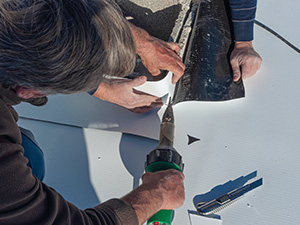
Thermoplastic membranes like TPO and PVC use heat-welded seams rather than adhesives alone. Heat fusion melts membrane edges together, creating a bond that can be stronger than the membrane itself.
From an engineering perspective, this process creates a continuous waterproof barrier instead of multiple vulnerable connection points.
Chemical Resistance
Commercial buildings may expose roofs to pollutants, oils, or chemical exhaust from equipment. Single-ply membranes are engineered with chemical-resistant formulations that prevent material breakdown.
This resistance extends membrane lifespan and maintains performance even in demanding industrial environments.
Moisture Vapor Management
Single-ply roofing systems are designed to balance waterproofing with controlled vapor movement. Specialized membrane structures allow trapped moisture to escape while preventing external water from entering.
This scientific balance reduces the risk of mold growth, insulation damage, and structural deterioration.
Flexibility, Movement, and Structural Adaptation
Commercial buildings naturally shift over time due to temperature changes, settling, and operational vibrations. Roofing systems must adapt without failing.
Elasticity and Material Memory
Single-ply membranes are engineered with elasticity that allows stretching and recovery. Known as “material memory,” this property enables membranes to return to their original shape after expansion or stress.
This flexibility prevents cracks commonly seen in rigid roofing materials.
Wind Resistance Engineering
Modern single-ply roofing systems undergo wind uplift testing to ensure performance during severe weather events. Attachment methods, mechanically fastened, fully adhered, or ballasted, are selected based on building design and local climate conditions.
Scientific testing ensures these systems maintain stability even under strong wind pressures.
Longevity Through Modern Roofing Science
The long lifespan of single-ply roofing systems is not accidental, it is the result of decades of research, laboratory testing, and real-world performance analysis.
Manufacturers conduct accelerated weather testing to simulate years of exposure to sunlight, moisture, and temperature cycles. These studies help refine membrane formulations to resist aging, brittleness, and degradation.
For commercial property owners, this means predictable performance, easier maintenance, and fewer unexpected repair costs over time.
Additionally, single-ply systems are often recyclable and compatible with sustainable construction goals, supporting environmentally responsible building management without sacrificing durability.
Single-Ply Roofing Experts
Working with knowledgeable professionals ensures that material science translates into real-world results. Century Commercial Roofing helps building owners in Montrose, OH implement scientifically engineered roofing systems tailored to their facilities. To discuss your roofing project or schedule a consultation, contact Century Commercial Roofing at 330-926-6972 today.
FAQ
What types of buildings benefit most from single-ply roofing?
Large commercial buildings, warehouses, retail centers, and office complexes benefit from its lightweight and energy-efficient design.
Are single-ply roofing membranes environmentally friendly?
Yes, many membranes are recyclable and designed to improve energy efficiency, supporting sustainable construction practices.
How do heat-welded seams improve roof performance?
Heat welding creates a continuous waterproof bond that is stronger and more reliable than traditional adhesive seams.
Can single-ply roofing handle extreme weather conditions?
Yes, engineered flexibility and tested wind resistance allow these systems to perform well under temperature changes and severe weather.